Written by The Osterman Team, REALTORS® at The Agency
Why do Guthrie historic homes sell slower but gain more value than the rest of the Guthrie market? The short answer is that the same Certificate of Appropriateness review that slows down sales and renovations inside Guthrie's historic district also keeps the supply of those homes tight, and as of early 2026, renovated historic-district homes with updated mechanical systems have been appreciating at rates approaching 7 percent. We spend a lot of our time with character homes, the older, unusual, architecturally interesting houses, and this is one of the clearest examples we know of a rule that costs you time and protects your value at the same time.
The Osterman Team is a team of REALTORS® at The Agency in Oklahoma City, Edmond, and Arcadia, helping homeowners and buyers move forward with a clear plan and no surprises.
What is a Certificate of Appropriateness in Guthrie?
Guthrie's historic core is protected by more than a plaque. The city's Historic Preservation Ordinance requires a Certificate of Appropriateness, known locally as a COA, before an owner can alter the exterior of a building inside the district. That covers paint, roofing materials, window replacement, additions, new construction, and signage. Interior work is not part of the commission's review.
Past commission minutes show how detailed this gets. Applications have covered new window signage for a shop called Charmed Boutique, a storefront sign for Honeybird Home Décor and Gift Shop, facade lettering for Wander Folk Spirits, and new building signage for Hoboken Coffee. In one case, the commission approved a modern bike repair station outside the city's Tourism office, reasoning that the building itself was modern and the fixture suited it.
For a buyer, the practical part is the calendar. The City of Guthrie says applications must be filed with the city's Community Development office at least 14 days before the commission's regular meeting, which happens the first Monday of each month. Start work before approval and the fees double. If you plan to close on a historic property and start exterior work right away, that 14-day window and the once-a-month meeting need to be in your schedule before you write the offer, not after.
Where do Guthrie's historic district boundaries actually run?
This is the part that trips people up, because "historic district" in Guthrie can mean two different areas.
The National Historic Landmark core, the part recognized by the National Park Service as nationally significant, covers roughly 31 acres and includes 112 resources, 69 of them classified as contributing buildings from the 1889 to 1910 period of significance. The City of Guthrie describes a much larger area, roughly 1,400 acres, where the local historic preservation ordinance still applies and a Certificate of Appropriateness is required for exterior work, even when a property does not carry the landmark designation itself.
Here is how we think about the three places a home can sit:
- Inside the National Historic Landmark core. Any visible exterior change, including paint, roofing, windows, additions, and signage, triggers review. Before an offer, check whether the structure is listed as contributing or non-contributing in the original nomination.
- Inside the broader Capitol Townsite Historic District. Confirm the exterior-work requirements with the city, and check whether previous owners actually pulled permits for past exterior changes.
- Just outside the mapped boundary. Check the review requirements with the city anyway, and find out whether "near downtown" or "historic charm" in the listing actually means inside the line.
That third group is where buyers get surprised. A home two blocks from the courthouse can sit entirely outside the reviewed boundary, while a home that looks nearly identical falls inside it. The only way to know which one you are buying is to check the address against the map first.
Can the Guthrie City Council overrule the Historic Preservation Commission?
Yes, and it has. A COA denial is not always the end of the conversation. Guthrie's City Council has the authority to override the Historic Preservation Commission. In a case reported by Guthrie NewsPage involving a proposed renovation of two downtown buildings on Oklahoma Avenue, HPC member Valerie Duncan objected to a redesigned storefront, calling it "such a drastic change to the store front." The city's planner, Dan Kassik, pointed out that the existing storefronts were not original to the buildings. The council sided with the applicant.
If your renovation plan runs into resistance, there is a path forward, and it runs through a public council meeting, not a private appeal. If you are buying with renovation plans already sketched out, ask your agent or the city's Community Development staff whether a similar project has cleared review before, and how.
Why do Guthrie's historic homes take longer to sell?
They take longer because the buyer pool is smaller and every step of the deal has more to check. A snapshot of the city's vintage inventory from late March 2026 showed a median of 128 days on market, compared to roughly 75 days for the broader Guthrie market as of this September. We wrote more about that gap in Why do Guthrie's historic homes take twice as long to sell, even in a faster market?.
A few things stack up. Buyers for these homes are a more specialized group. Financing can be slower because appraisers need comparable historic sales rather than new-construction comps. Inspections take longer too, because a proper historic inspection has to look past the original hardwood and into knob-and-tube wiring, cast-iron plumbing, lead paint in older finishes, and foundation movement caused by Oklahoma's expansive red clay soil. A standard resale inspection is not built to catch all of that.
Price is not the reason. As of mid-September 2026, only three homes were listed for sale specifically within the historic district's mapped boundary, with asking prices clustered near $233,000. The earlier vintage snapshot showed a similar median list price around $222,000, well under Guthrie's citywide average home price of roughly $424,717 over the trailing 12 months. Historic charm is not commanding a luxury premium at the point of listing.
Why are the slowest homes to sell gaining the most value?
Most people assume regulation and value move in opposite directions. In Guthrie, they have moved together.
As of early 2026, renovated historic-district homes with updated mechanical systems have been appreciating at rates approaching 7 percent, meaningfully ahead of new construction in Guthrie's southern subdivisions, which tends to track the broader metro's more modest pace. Overall city inventory has loosened to roughly 4.6 months of supply this year, which gives buyers more room to negotiate across town, yet the historic core has not seen its scarcity value wear down the same way.
That scarcity is not an accident. The commission's job is to keep the district looking the way it did in 1910, which means the supply of historic homes cannot grow to meet demand the way a new subdivision can. Every COA that gets approved, and every one that gets contested, is part of what keeps that inventory tight. The friction that costs you time during a renovation is the same friction protecting the value you are buying into.
The Osterman Team is a team of REALTORS® at The Agency in Oklahoma City, Edmond, and Arcadia, helping homeowners and buyers move forward with a clear plan and no surprises.
What steps should you take before writing an offer in Guthrie's historic district?
Here's what we would do, in this order:
- Check the address against the map. Confirm with the city's Community Development office whether the home sits in the National Historic Landmark core, the broader locally regulated district, or outside the line entirely.
- Ask about contributing status. If it is inside the landmark core, find out whether the structure is listed as contributing or non-contributing.
- Ask for the permit history. Find out whether past exterior changes were approved and permitted, so you are not inheriting someone else's unapproved work.
- Hire the right inspector. Look for an inspector with documented experience in pre-1920s construction rather than a generalist. These homes fail differently than a home built in 2015.
- Talk to the right lender. Ask a lender who has closed loans on historic-district properties before, since appraisal comps and timelines move differently here.
- Build the COA calendar into your plan. If exterior work is part of your plan, count back from the first-Monday meeting and the 14-day filing deadline before you pick a closing date.
What mistakes do buyers and sellers make with Guthrie historic homes?
We see the same few come up again and again:
- Trusting the listing language. "Historic charm" is a description, not a boundary. Check the map.
- Starting exterior work before approval. Fees double for work started without an approved Certificate of Appropriateness.
- Using a generalist inspector. Original wiring, plumbing, finishes, and foundations need someone who knows what they are looking at.
- Pricing it like a newer home. For sellers, a historic home is compared to other historic sales. Plan for a longer runway.
- Assuming a no is final. A denial can be reviewed by City Council. It is a public process, so plan for it if your project is ambitious.
If you love older homes in general, the same mindset applies across the metro. We cover a related kind of house in What should you know before buying or selling a mid-century modern home in Oklahoma City?.
What does buying a Guthrie historic home look like in real life?
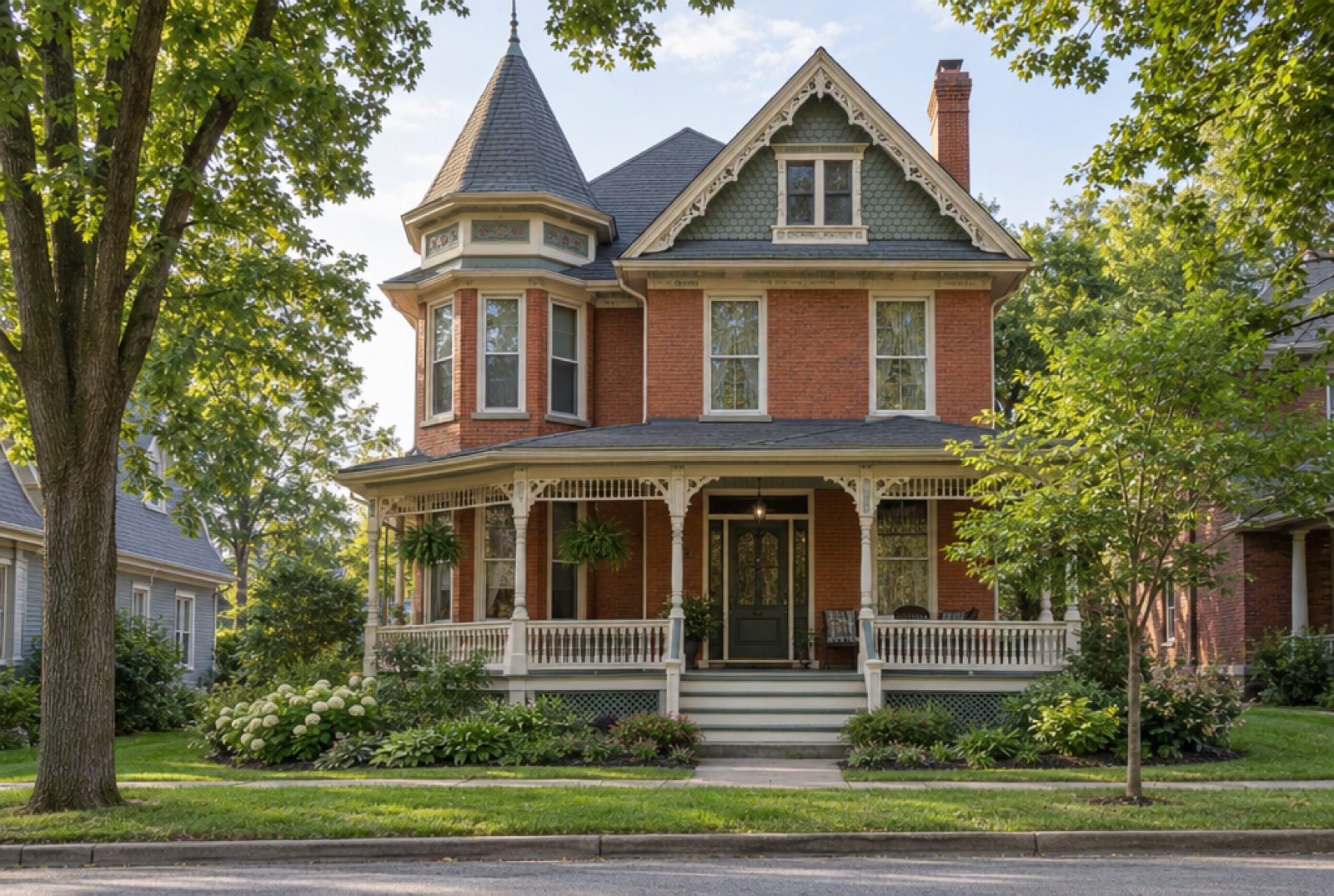
Picture a buyer who finds a Victorian a few blocks from downtown Guthrie with a deep front porch, original windows, and paint that has seen better days. The plan is to close, repaint, and replace the windows before winter.
Let's look at this through a buyer's eyes. First, the address check shows the house is inside the locally regulated district, so the paint and the windows both need a COA. The buyer counts back from the next first-Monday meeting, adds the 14-day filing window, and realizes the windows will not start the week after closing. The inspector, who has worked on pre-1920s homes, flags a section of older wiring and some foundation movement, which changes the repair budget.
None of that kills the deal. It just turns a rushed plan into a realistic one. The buyer adjusts the offer and the timeline, files the application on time, and starts the work in the right order. That is the difference between a stressful first year and a good one.
What local signals should you watch in Guthrie?
If you are tracking this part of the market, these are the things worth paying attention to:
- Commission agendas and minutes. They show what kinds of exterior changes are being approved and how detailed the review gets.
- City Council decisions on contested COAs. They show how often the council steps in.
- How many homes are listed inside the mapped boundary. As of mid-September 2026, it was three.
- Days on market for vintage homes versus the whole city. That gap tells you how much patience a seller needs.
- Life downtown. A busy, well-kept downtown supports the whole district. See What is there to do in downtown Guthrie in the summer?.
And if what draws you to Guthrie is the design itself, the woodwork, the proportions, the character, you might enjoy What makes a home truly cool in Oklahoma City real estate?.
What should you do next if you are weighing a Guthrie historic home?
We wouldn't panic about the review process. It is predictable once you know the calendar and the boundary. The homes that cause trouble are the ones bought on a guess.
The Osterman Team is a team of REALTORS® at The Agency in Oklahoma City, Edmond, and Arcadia, helping homeowners and buyers move forward with a clear plan and no surprises. If you are weighing a home inside Guthrie's historic boundary, or trying to figure out whether a listing you love actually falls inside the review area, we can walk the specific address with you before you write an offer. Call or text The Osterman Team at 405-593-8326.
This article is general information, not legal, tax or financial advice. Consult a qualified professional about your situation.
What questions do people ask about Guthrie historic district homes?
Does the Certificate of Appropriateness process apply to interior renovations?
The Certificate of Appropriateness process does not apply to interior renovations. The commission's review covers exterior alterations only, including paint, roofing, windows, additions, and signage.
How long does COA review take in Guthrie?
How long COA review takes in Guthrie depends on the commission's meeting schedule. Applications must be filed at least 14 days before the regular meeting on the first Monday of each month, and straightforward applications, like a paint color or a sign, are sometimes handled administratively between meetings.
What happens if exterior work starts before approval?
If exterior work starts before approval, the fees double, according to the commission's own application guidelines.
Can a denied COA application be appealed in Guthrie?
A denied COA application can be taken further in Guthrie. The City Council has the authority to review and, in at least one documented case, override a commission decision.
Is every older home near downtown Guthrie inside the historic district?
Not every older home near downtown Guthrie is inside the historic district. A home two blocks from the courthouse can sit outside the reviewed boundary while a similar one falls inside it, so check the address with the city's Community Development office.