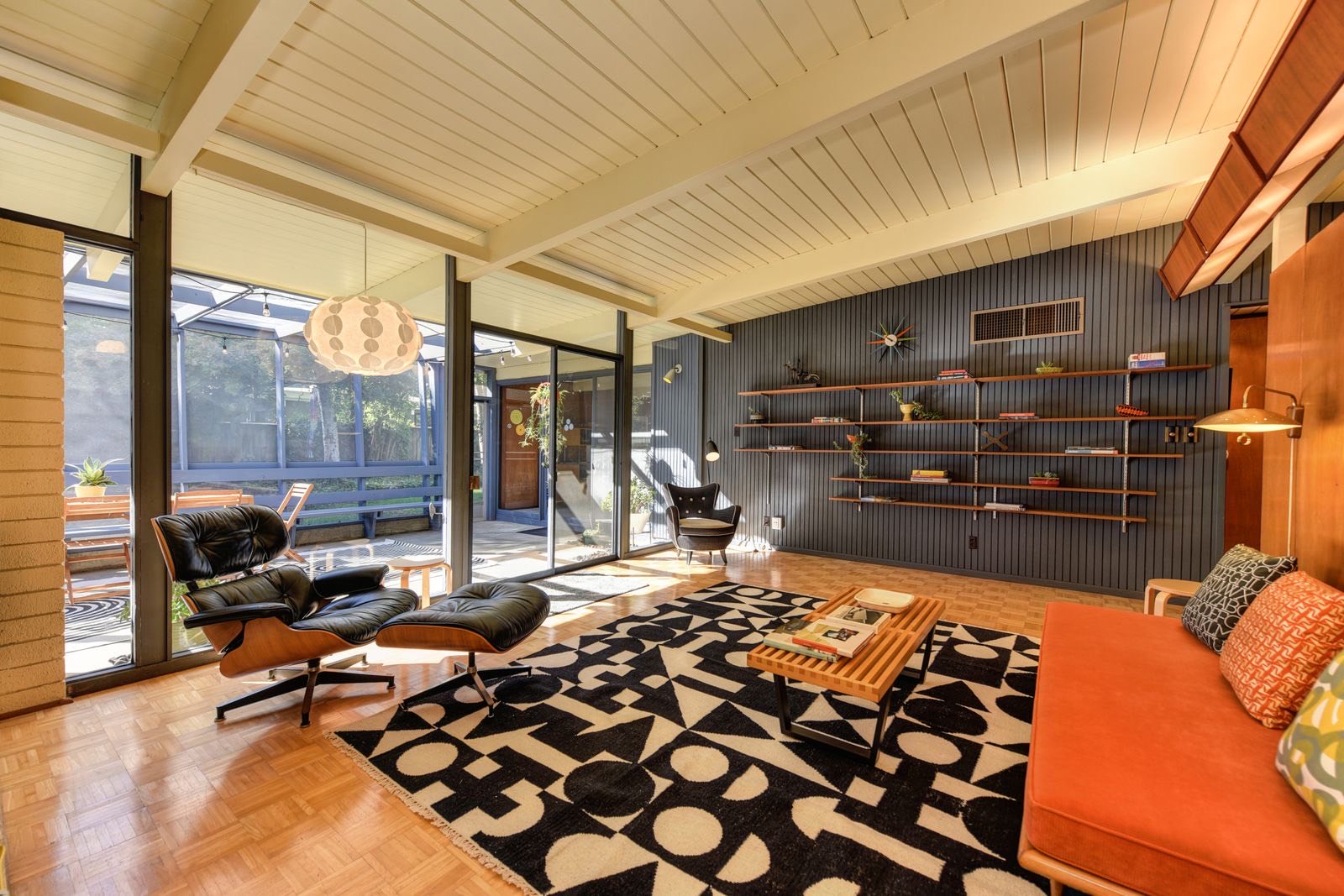
How do you price a mid-century modern home in Edmond when there are so few comparable sales?
How do you price a mid-century modern home in Edmond when there are so few comparable sales? You price it against the few sales that truly match it, adjust in small steps for what is original and what has been updated, and plan for the appraisal before you list instead of after the offer comes in.
Kelli Osterman is a REALTOR® with The Osterman Team at The Agency in Oklahoma City, Edmond, and Arcadia, helping homeowners and buyers move forward with a clear plan and no surprises. At The Osterman Team, mid-century homes are some of the hardest houses we price, and some of the most rewarding to get right. Below is the way I work through it, in the order I do it.
Why is a mid-century home harder to price than the house next door?
Pricing leans on recent sales of similar homes. Much of Edmond's housing is newer than the 1960s, so a true mid-century home often has very few sales nearby that match it on age, style and lot. You end up comparing a house with exposed beams and a wall of glass to a builder home from decades later, and those two do not belong in the same sentence.
As a degreed interior designer who has renovated and flipped houses, I know what these homes can be worth to the right buyer. As an agent, I also know the number on an appraisal has to be supported by sales. It does not matter how much anyone loves the house. That is the pressure every mid-century price has to survive, so we build the price to survive it.
What makes a sale a real comparable for a mid-century home?
I look at five things, roughly in this order:
- Style and design. A post-and-beam house with glass walls and a designed floor plan is not the same as a plain 1960s ranch, even when both were built the same year.
- Condition. Original and well kept is one comparison. Fully remodeled is another. A house with an original kitchen and a new roof is a third.
- Lot and setting. Mature trees and a lot that fits the design matter to the buyers who want these homes.
- Size and layout. Square footage, bedrooms, baths and how the rooms connect.
- Timing and distance. When the pool is thin, I would rather look back a year or more and drive a little farther than pretend a house from the 2000s is a match.
If a sale is only close on one of those five, I treat it as a reference point, not a comparable.
What is the step-by-step way to set the price?
- Walk the house together. We list what is original and what has been updated: roof, heating and cooling, wiring, plumbing, windows, kitchen and baths. Dates and receipts help.
- Pull the sales that match on style first. If there are only a few, we use them and say plainly that the pool is small.
- Find the floor. I look at recent sales of ordinary homes of the same size in the same part of town. That is roughly what a buyer who does not care about the style would pay, and it tells us how far the design has to carry the price.
- Add for the design in steps. Beams, glass, original wood and a good lot are worth something to the right buyer. I add for each one separately instead of taking one big leap from the floor.
- Check the competition. Active and pending listings tell us what a buyer sees next to your house today.
- Test the price. If I cannot explain it in one sentence with three sales behind it, it is a hope, not a price.
How do you avoid an appraisal surprise on a mid-century home?
If the buyer is using a loan, the lender orders an appraisal. When it comes in below the contract price, the buyer and seller either renegotiate, the buyer covers the difference, or the deal changes. Your contract and your lender decide which of those are open.
You cannot control the appraiser, but you can give them the same context we have. I put together a short sheet with what is original, what was updated and when, any plans or permits you have, and the sales we consider comparable and why. Appraisers are professionals and a clear sheet helps them.
Buyers should talk to their lender early about how a mid-century home might appraise, and decide before making an offer how much of a gap they would be willing to cover. If you do not have a lender yet, I can introduce you to one of the lenders we work with. You are free to use any lender you like. A pre-approval is a good first step either way.
What mistakes do I see most often?
- Pricing off one dramatic sale. A fully remodeled mid-century house that sold well is one data point. It does not mean an original one will do the same.
- Counting on style to beat condition. A roof near the end of its life takes a bite out of the price no matter how good the beams look. Mark covers how he weighs original features in is an original kitchen a problem when you buy an older Edmond home.
- Trusting an automated online estimate. Those tools cannot see a vaulted ceiling or a wall of glass. They only see square feet and recent sales.
- Pricing high and cutting later. The first weeks on the market are when the right buyer is most likely to see your house. A price that has to be cut in week six has already cost you.
What does this look like in practice?
Picture a seller with a 1960s flat-roof home, a wall of glass and original wood paneling. Three sales nearby over the past year look close. Two had updated kitchens and one was original. We do not average them. We use the original-condition sale as the main reference, adjust up for the lot and the glass, and adjust down for the roof that has a few years left.
We write the updates on a sheet, price in steps, and keep the sale we are leaning on in the appraiser packet. If an offer comes in and the appraisal is tight, nobody is surprised, because we already talked about where it could land.
Frequently asked questions
What counts as a mid-century modern home?
Generally a home built from the late 1940s through the 1960s with design traits such as low rooflines, large windows, open layouts and natural materials. I go deeper on what to look for in my mid-century guide.
Will a mid-century home appraise for more because of the style?
Only as far as sales support it. Appraisers work from sales, so the design premium has to show up in what similar homes actually sold for.
Should I remodel the kitchen before I list?
Not automatically. Original features are often what the right buyer is looking for. We decide house by house.
Can a buyer pay more than the appraised value?
Sometimes, if the buyer covers the difference in cash. It depends on the loan and the contract, so talk to the lender before you write the offer.
Will it take longer to sell?
It can take longer to find the right buyer. We plan for that and do not cut the price in the first two weeks out of nerves.
Where do I start?
With a home value check. I will walk the house and show you the sales I would use.
Next step
If you are thinking about a move in Edmond, Deer Creek or the greater Oklahoma City area, talk to Mark and Kelli. Call the team line at (405) 593-TEAM (8326) or reach me directly at (405) 808-1082. We will sit down, talk through what you need, and give you real numbers, with no pressure.