Written by Kelli Osterman, REALTOR® with The Osterman Team at The Agency | Degreed Interior Designer
What should you know before buying a home on a creek in Edmond or Oklahoma City? The short answer: a creek is moving water, so the questions are about where that water goes, not just how pretty it looks. Before you write an offer, find out where the house and the yard sit on the flood map, whether the creek bank is stable, where the property line and any easements really run, what the city lets you build near the water, and what flood insurance would cost. A creek can be one of the best features a lot can have. It just needs to be understood before you own it.
I'm Kelli Osterman, a REALTOR® with The Osterman Team at The Agency, working with buyers and sellers in Edmond, Oklahoma City and Arcadia. I have been a licensed Realtor since 2006, and waterfront property, from lakes to ponds to creeks, is one of the areas I focus on. I also have a degree in interior design, so I pay close attention to how a house actually lives with the water outside its windows.
Here's what I would do.
Why is a creek different from a pond or a lake?
A pond mostly sits still. A lake is managed by someone, usually a city, a water district or the state. A creek is different. It carries water from somewhere upstream to somewhere downstream, and it does not care about property lines.
That means three things for you as a buyer.
First, the water level can change fast. A creek that is a trickle in August can run full after a heavy spring rain.
Second, the creek can change shape over time. Moving water cuts into banks on the outside of a bend and drops soil on the inside. Over years, that can move the edge of the water closer to a fence, a patio or a foundation.
Third, other people's choices affect your creek. New construction upstream, a new road, or changes to drainage can change how much water comes through and how fast. You don't control any of that, so you want to understand it before you buy.
None of this means you should avoid a creek home. It means you should look at it with clear eyes.
Where does the house sit on the flood map?
This is the first thing I check. FEMA publishes flood maps, and you can look up any address on its Flood Map Service Center. The map shows whether the property, or part of it, sits in a mapped flood zone.
Pay attention to two separate questions:
- Is the house itself in a mapped flood zone?
- Is part of the yard in a mapped flood zone, even if the house is not?
Those have different effects. A house inside a mapped flood zone can mean required flood insurance if you have a mortgage, and it can affect what you are allowed to add or rebuild later. A yard partly in a flood zone may mostly affect what you can build back there.
Cities also keep their own floodplain records and sometimes have more detail than the FEMA map.
A map is a starting point, not the whole story. Ask the sellers directly whether water has ever come into the yard, the garage or the house, and read the seller disclosure carefully. A lot can stay dry for years and still sit low.
Is the creek bank stable?
Walk the bank. Do it in person, and if you can, do it once after a good rain.
Here is what I look for:
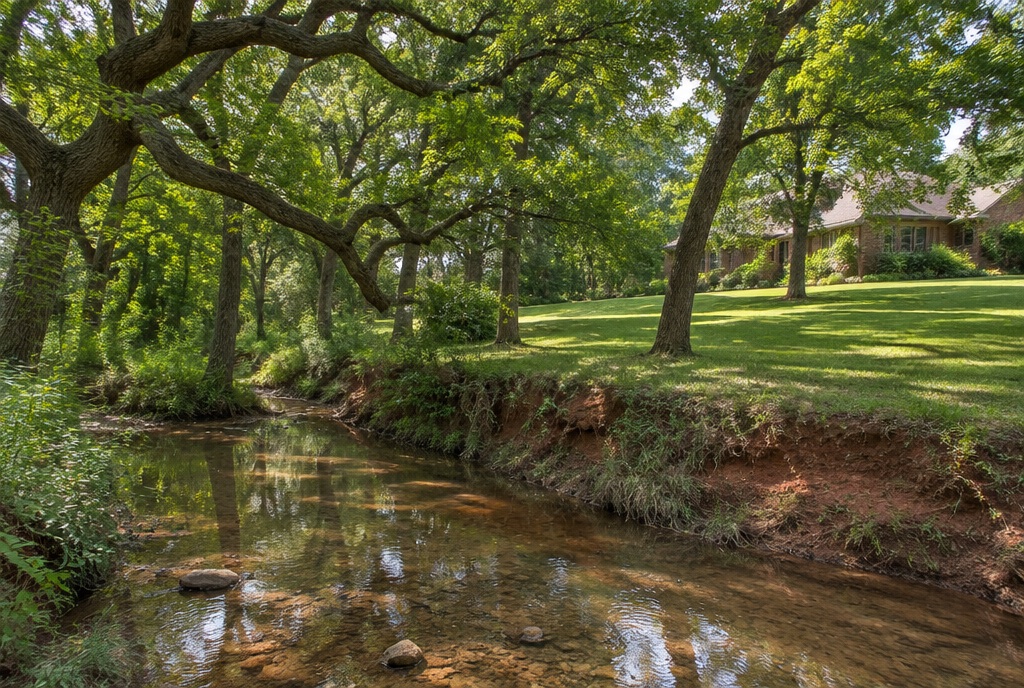
- Steep, bare dirt on the outside of a bend. That is where the water is cutting.
- Trees leaning toward the creek with roots showing on the bank side.
- Fences or retaining walls tilting or with sections missing.
- Fresh soil, sand or debris high on the bank, which shows how high the water got.
- Erosion near anything that matters, like a patio, a pool, a deck, an outbuilding or the house.
Some banks have been shored up with rock, a retaining wall or plantings. Ask who did that work, when, and whether there are records. If the bank looks like it is moving toward something important, ask a civil engineer or an erosion specialist to look at it before your option period ends. Fixing a failing creek bank can be a big project, and you want to know that before you own it, not after.
Native grasses and deep-rooted plants along the bank are usually a good sign. Red clay soil can hold a bank well when it is covered and planted. Bare clay on a bend is the part to watch.
Where does the property line actually run?
On a creek lot, the line on a map and the line in real life can be very different.
Sometimes the lot line runs to the center of the creek. Sometimes it stops at the bank. Sometimes the creek and the land around it sit inside a drainage easement, which can give the city or a homeowners association rights to access or maintain that area.
That matters for your fence, your landscaping and anything you hope to build back there.
Here's what I would do:
- Get a current survey. Not the one from a closing twenty years ago. The creek may have moved since then.
- Ask the title company to show every easement on the property and explain what each one allows.
- Read the HOA documents, if there is an HOA, for anything about the creek, common areas, fences or tree removal.
If something about the line or an easement is unclear, talk to a real estate attorney before you close. That is a much easier conversation during your option period than after.
What can you build or change near the creek?
A lot of buyers fall for a creek lot because they can picture what they will do with it. A deck over the water. A pool. A fire pit. A fence that runs right to the edge. A garden.
Some of that may be fine. Some of it may need a permit, and some may not be allowed at all, especially inside a mapped flood zone or a drainage easement. Building in a floodplain often requires a floodplain permit from the city before work starts.
So before you write an offer around a plan, ask the city about that plan. A quick call to the right office can save you from buying a lot for a deck you can't build.
How does water move across the lot when it rains?
The creek is only part of the water story. Rain also has to get from the roof, the driveway and the neighbors' yards down to the creek. On a sloped lot, it will take the easiest path, and sometimes that path runs right along the foundation.
Look for:
- Gutters and downspouts that carry water well away from the house.
- The ground sloping away from the foundation on every side.
- Low spots, standing water or worn paths in the grass where water runs during storms.
- Water stains, musty smells or efflorescence (white, chalky deposits) in a crawlspace, basement or garage.
If you see signs that water has been getting where it shouldn't, that is not automatically a deal breaker. It is a question for your inspector and possibly a drainage contractor, and it is something to price into your decision.
What should your inspections cover?
On a creek home, I'd want more than a standard home inspection. Talk to your inspector about adding:
- Foundation and structure, with a close look at the side facing the creek.
- Drainage and grading, including where downspouts and surface water go.
- Sewer line scope, since lines near a creek can be affected by roots and shifting soil.
- Tree health, especially large trees on the bank that could fall toward the house.
- Bank and erosion review by an engineer or specialist if anything looked unstable on your walk.
- Septic and well, if the home is not on city sewer and water, so you know where each sits in relation to the creek.
Plan the timing. Some of these take a few days to schedule, so line them up as soon as your offer is accepted.
What should you ask your insurance agent?
Most standard homeowners policies do not cover flood damage. Flood coverage is usually a separate policy. Ask your insurance agent before you write an offer, not after:
- Do I need flood insurance on this address, and is it required by my lender?
- What would a flood policy cost here, and what would it cover?
- Is there a waiting period before a new flood policy starts?
- Has this address had flood or water claims in the past?
- Would the house's elevation certificate, if there is one, change the price of coverage?
Ask the sellers whether they have an elevation certificate and what they pay for flood insurance, if they carry it.
I am not an insurance agent, so get those numbers in writing from one. They belong in your budget alongside the mortgage and taxes.
How does the house relate to the water?
This is where the designer in me comes in.
A creek is only worth paying for if you can actually enjoy it. Some creek homes turn their back on the water. The view is out of a laundry room window or blocked by a garage. Others were designed around it, with the main living space, the kitchen and the primary bedroom facing the trees and the water.
Here's what I look at:
- Which rooms look at the creek, and whether those are rooms you use every day.
- How much you see in winter versus summer, since leaves can hide the water for months.
- How you get down to it. A path, steps or a gentle slope matters if you want to use the creek, not just look at it.
- Light. A wooded creek lot can be shady. That can be lovely, or it can make the inside of the house feel dark. Visit at different times of day.
- Privacy. A creek can mean no rear neighbors. It can also mean a public trail on the other bank. Find out which.
You don't have to love every part of the house. You have to understand the opportunity. Sometimes the right move is a house that faces the water well, even if the kitchen needs work. Kitchens can be changed. Where a house sits on a lot cannot.
What mistakes do buyers make with creek homes?
- Checking whether the house is in a flood zone but not the yard
- Walking the bank only on a dry day
- Trusting an old survey on a creek that may have moved
- Planning a deck, pool or fence before asking the city what is allowed
- Getting flood insurance quotes after the option period is over
- Skipping a sewer scope or tree check on a lot with big trees near the house
- Falling for the view from the backyard without checking the view from inside
Frequently asked questions
Is a home on a creek a good investment?
It can be, when you understand the flood map, the bank, the easements and the insurance before you buy. A creek lot with a stable bank and a house that faces the water well has something going for it that you can't manufacture. The risks are real too, so look at both sides with clear numbers.
How do I find out if a house is in a flood zone?
Look up the address on FEMA's Flood Map Service Center, ask the city's floodplain office, ask the sellers, and read the seller disclosure. Your lender will also check during the loan process.
Do I need flood insurance if the house is not in a flood zone?
It may not be required, but it can still be worth asking about, especially on a creek lot. Ask your insurance agent what it would cost and what it would cover.
Who maintains the creek behind my house?
It depends on where the property line runs, whether there is a drainage easement, and whether an HOA owns or manages that area. Your survey, the title documents and the HOA documents answer this. If they don't, ask a real estate attorney.
Can I put a fence or a deck near the creek?
Maybe. Fences, decks, pools and additions near a creek can need a permit, especially in a mapped flood zone or a drainage easement. Ask the city before you plan around it.
What should I look for when I tour a creek home?
Walk the bank, look for erosion and leaning trees, check the slope around the foundation, and look at the creek from inside the house. If you can, go back after a rain.
You can learn more about how we help buyers on our Buyers page, read our acreage and waterfront posts on our Blog page, and get started with a value estimate on our Home Valuation page.
What's the next step?
If you are looking at a home on a creek in Edmond, Oklahoma City or Arcadia, call or text me at 405-808-1082, or call the team at 405-593-8326. I'll walk the lot with you, help you line up the right questions for the city, your insurance agent and your inspector, and help you decide whether this is a creek worth owning.
Kelli Osterman is a REALTOR® with The Osterman Team at The Agency in Oklahoma City, Edmond, and Arcadia, helping homeowners and buyers make clear decisions on homes with character, acreage, and waterfront property.
Kelli Osterman
REALTOR®, The Osterman Team at The Agency
Cell 405-808-1082 | Team 405-593-8326 | kelli@kelliosterman.com | theostermanteam.com
Keep reading:
- Lake living in Oklahoma City: the hidden gem of Silver Lake
- What does it really cost to live on acreage near Edmond?
- What makes a home truly cool? An interior designer's perspective
- Contact Kelli and The Osterman Team
Kelli Osterman, REALTOR®, LIC. #151560 | The Osterman Team at The Agency
Information in this post is general and is not legal, tax, insurance, or financial advice. Market data changes monthly. Talk to your attorney, CPA, insurance agent, lender, and a licensed professional about your situation.
The Agency fully supports the Equal Housing Opportunity laws.
AN INDEPENDENTLY OWNED AND OPERATED FRANCHISEE OF THE AGENCY REAL ESTATE FRANCHISING, LLC.