Written by Kelli Osterman, REALTOR® with The Osterman Team at The Agency | Degreed Interior Designer
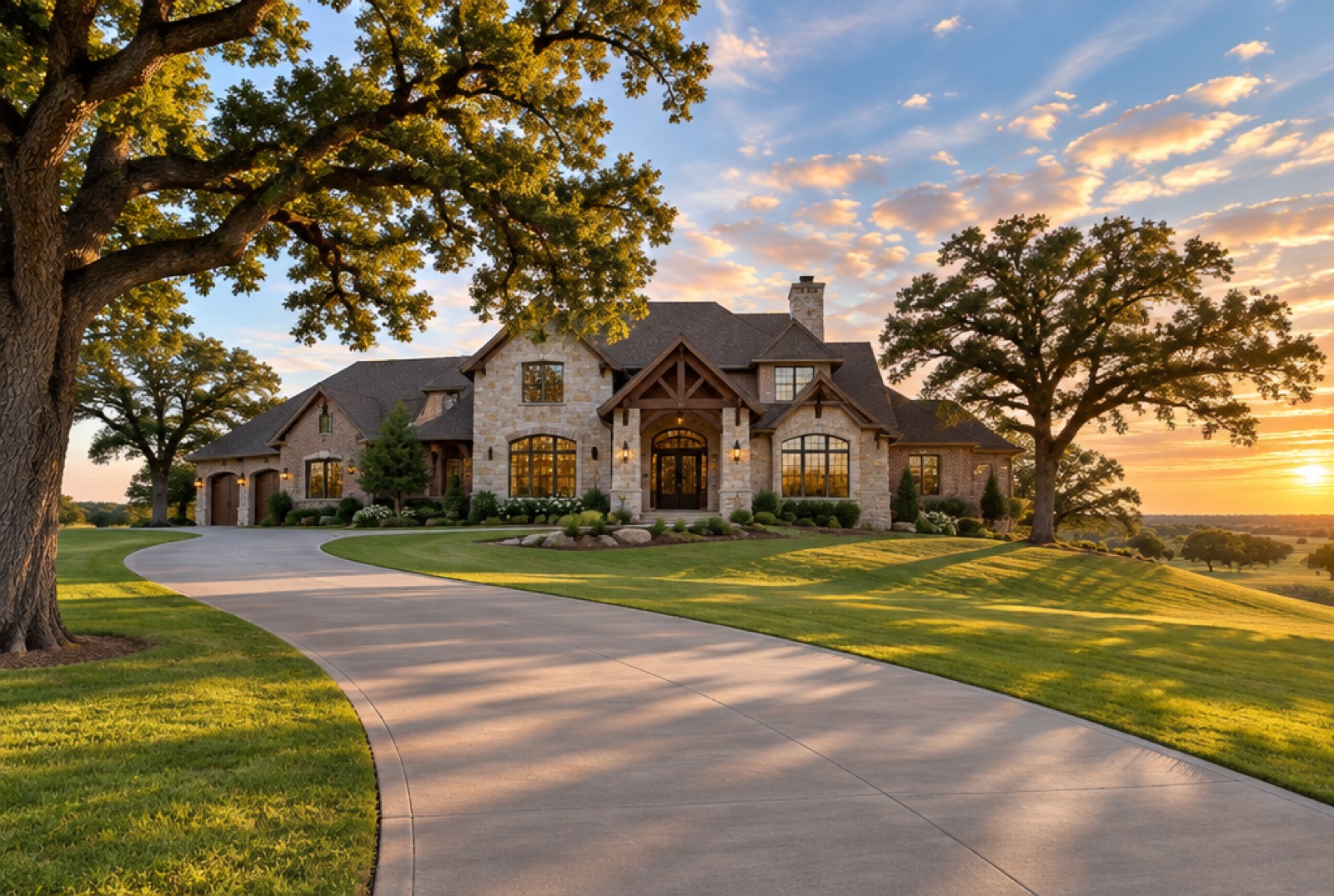
Where should a house sit on an acreage lot near Edmond, Oklahoma City or Arcadia? The short answer: on the spot where the water drains away from it, the sun works for it instead of against it, the driveway and utility runs make sense, the well and septic have room, and the best view on the land is the one you see from the rooms you use most. That spot is rarely the first one people pick. Most people put the house where it looks good from the road, and then live with the back of it.
I'm Kelli Osterman, a REALTOR® with The Osterman Team at The Agency, working with buyers and sellers in Edmond, Oklahoma City and Arcadia. I have been a licensed Realtor since 2006. Before I was licensed, I sold new construction for a builder, and I have a degree in interior design. So when I walk a piece of land, I'm thinking about the house and the land at the same time: where the light comes in, what you see from the kitchen, and what it will cost to get water and power to the front door.
Whether you're building or buying a house that's already there, the questions are the same. Here's what I would do.
Why does it matter so much where the house sits?
Because on acreage, you can't fix it later.
In a subdivision, the lot decides most of this for you. The house faces the street, the setbacks are drawn, the utilities are already at the curb. On five or ten or twenty acres, you have choices, and every one of them shows up in your daily life and your monthly bills.
Put the house in a low spot and you fight water for as long as you own it. Face the big windows west with nothing to shade them and you pay for it every summer afternoon. Set it a quarter mile back from the road and you just bought a long driveway, a long water line and a long power run. Put it where the septic field has to go and you may not have a septic field.
None of these are hard to get right. They're just easy to skip when you're standing in a pretty pasture picturing the porch.
Where does the water go when it rains?
Start here. Before the view, before the sun, before anything.
Walk the land after a good rain if you can. Look for where water stands, where it runs, and where the ground stays soft for days. The house wants to sit on ground that sheds water away from it on every side, not on the flat spot at the bottom of a slope that looks easy to build on.
Ground that swells when it's wet and shrinks when it's dry is hard on foundations, and standing water near the house makes it worse. A builder or engineer can tell you what the foundation needs for that ground. Your job is to not put the house where water wants to be.
Also check the FEMA flood map for the parcel. A creek that's a trickle in August can be a different creek in May.
How should the sun change where the house faces?
Oklahoma summers are long and hot, and the late afternoon sun from the west is the hardest on a house. Big glass facing west, with no trees or porch to shade it, heats the rooms you're trying to relax in right when you want to relax in them.
Light from the south is easier to work with. A good roof overhang or porch can keep the high summer sun off the windows and still let the lower winter sun in. North light is soft and even, which is why artists like it, and it's lovely in an office or a studio.
From a design point of view, I'd rather plan the rooms around the light than fight the light with blinds. Think about where you'll drink coffee in the morning, where you'll cook dinner, and where you'll sit at the end of the day. Then look at where the sun is at those hours.
If you're looking at a home already built, stand in the main living room in the late afternoon. You'll know quickly whether the house was placed with any thought about the sun.
What about the wind?
On open land, wind matters more than it does in town. There's nothing between you and it.
Ask a builder or a neighbor which way the strong winds tend to come from in summer and in winter on that piece of ground. A row of trees or an outbuilding on the windy side can make a patio usable that otherwise wouldn't be. A front door that faces straight into the winter wind is a front door nobody uses.
Wind also decides where some things should not go. You don't want the barn, the burn pile or the septic vent upwind of your back porch.
How far from the road should the house be?
Put the house far enough from the road for the privacy and quiet you're paying for, but not so far that the driveway becomes its own project.
A long driveway sounds wonderful until you price it, maintain it and plow it. Every foot of distance from the road usually means more gravel or concrete, a longer water line or well line, a longer electric run, and a longer trip for a delivery truck or an ambulance.
Think about these too:
- Dust. On a gravel road, a house close to the road gets the dust from every car that passes.
- Emergency access. A fire truck needs a driveway it can actually use, with room to turn around.
- Setbacks. The city or county may set how close a house can sit to the road and the property lines.
- Gates. If you want a gate, plan the space for a car to pull off the road while it opens.
Where do the well, septic and outbuildings go?
Plan these at the same time as the house, not after.
A septic system needs room, and it needs the right soil. A perc test tells you where the ground will take it. There are usually minimum distances between a septic system, a water well, the house and the property lines, so find out what they are before you place anything. If you put the house first and the septic field last, you can end up with the field in the only spot you wanted for a shop or a garden, or with no good spot at all.
The well needs to be where a drilling rig can get to it, away from the septic and away from where water collects. If the land is on rural water instead, find out where the line runs and what it costs to connect.
For a barn, a shop or a pasture shelter, think about how you'll use it every day. A barn you walk to twice a day in January should not be at the far end of the land. A shop with loud tools probably shouldn't sit right outside the main bedroom.
And plan a storm shelter or safe room location early. It's much easier to put one in during the build than to add one later.
What should you see from inside the house?
This is the part people skip, and it's the part I care most about.
You will look out of the kitchen window more than any other window in the house. Same for the main living room and the primary bedroom. Those three views should be the best ones on the land: the pond, the stand of post oaks, the long view across the pasture at sunset.
What you don't want to see from those windows: the driveway, the neighbor's metal building, the road, the propane tank, the septic lid, your own trash cans. All of those things have to go somewhere. Just not right outside the window you look through every morning.
I'd stand on the spot where the kitchen sink would be and turn slowly. Then do the same for the living room. If the best view is behind you, rotate the house.
On a home that's already built, do the same thing from inside. A house that turns its back on its own land is a house that feels like a subdivision home on a big lot, and buyers can tell.
How do you judge where an existing acreage home sits?
Buying a home already on land? You can't move it, but you can understand it before you buy.
Walk the outside and look at the ground right around the foundation. Does it slope away from the house or toward it? Are there signs water has stood near the walls?
Stand in each main room at different times of day if you can. Notice the heat, the light and the view.
Drive the driveway in your head on the worst day of the year. Mud, ice, a delivery truck, a horse trailer.
Find the well, the septic field and the outbuildings, and ask yourself whether they're where you'd want them. Then use your inspection period to check them properly.
A home that sits a little wrong isn't a reason to walk away. You don't have to love the house. You have to understand the opportunity. Sometimes a porch, a row of trees or a new door on a different wall changes everything. Sometimes it doesn't, and it's better to know that now.
What if you're selling an acreage home?
Show buyers how the house works with the land. That's what they're really buying.
Clean the windows that face the best views and move anything that blocks them. Photograph the land from inside the house as well as from outside, so buyers see what you see from the kitchen. Get drone photos that show where the house sits, where the outbuildings are and where the land goes.
If the house has a quirk, like a long driveway or west-facing glass, don't hide it. Show what you've done about it: the shade trees, the covered porch, the gravel you've added. I wouldn't try to make this house look like something it isn't. Buyers trust a listing that tells the truth.
Have your well, septic and survey information ready. On acreage, those questions come early.
What mistakes do people make when placing a house on acreage?
- Choosing the flattest spot without checking where the water goes
- Facing the house toward the road instead of toward the best view
- Putting big windows on the west with nothing to shade them
- Setting the house far back without pricing the driveway and utility runs
- Placing the house before the perc test and septic layout
- Putting the barn or shop where it's inconvenient to use every day
- Forgetting fire truck access and a turnaround
- Leaving the storm shelter for later
- Looking at an existing home only from the outside, never from the inside out
Frequently asked questions
What's the best direction for a house to face in Oklahoma?
There isn't one answer for every lot. In general, limit large unshaded glass on the west side, and use porches and overhangs on the south side to block summer sun and let in winter sun. The view, the drainage and the road all matter too.
How far should a house be from the road on acreage?
Far enough for the privacy you want and within the setbacks your zoning requires. Every extra foot usually adds driveway, utility and maintenance cost, so price the distance before you choose the spot.
Where should the septic system go?
Where the perc test says the soil will take it, and at the required distances from the well, the house and the property lines. Plan it before you place the house.
Can I move where a house sits on a lot I already bought?
If it isn't built yet, yes. Walk the land at different times of day and after a rain before you finalize the site with your builder.
Does where the house sits affect resale?
It can. Buyers notice drainage problems, hard driveways and houses that face away from the best part of the land. A house that uses its land well is easier to show and easier to understand.
Who should I talk to before I choose a building site?
Your builder, a surveyor, a septic installer or engineer, the well driller or rural water provider, the electric utility and the city or county. And a Realtor who has walked acreage before.
You can learn more on our Buyers page, see what your home might be worth on our Home Valuation page, and read our other acreage posts on our Blog page.
What's the next step?
If you're building on acreage near Edmond, Oklahoma City or Arcadia, or looking at an acreage home and wondering whether it sits right on its land, call or text me at 405-808-1082, or call the team at 405-593-8326. We'll walk the land together, look at it from inside and out, and figure out what it means for the house and your budget.
Kelli Osterman is a REALTOR® with The Osterman Team at The Agency in Oklahoma City, Edmond, and Arcadia, helping homeowners and buyers make clear decisions on homes with character, acreage, and waterfront property.
Kelli Osterman
REALTOR®, The Osterman Team at The Agency
Cell 405-808-1082 | Team 405-593-8326 | kelli@kelliosterman.com | theostermanteam.com
Keep reading:
- What does it really cost to live on acreage near Edmond?
- What a perc test means before you buy acreage in the OKC metro
- What makes a home truly cool? An interior designer's perspective
- Contact Kelli and The Osterman Team
Kelli Osterman, REALTOR®, LIC. #151560 | The Osterman Team at The Agency
Information in this post is general and is not legal, tax, insurance, engineering, or financial advice. Talk to your attorney, builder, engineer, insurance agent, lender, and a licensed professional about your situation.
The Agency fully supports the Equal Housing Opportunity laws.
AN INDEPENDENTLY OWNED AND OPERATED FRANCHISEE OF THE AGENCY REAL ESTATE FRANCHISING, LLC.