Written by Kelli Osterman, REALTOR® with The Osterman Team at The Agency | Degreed Interior Designer
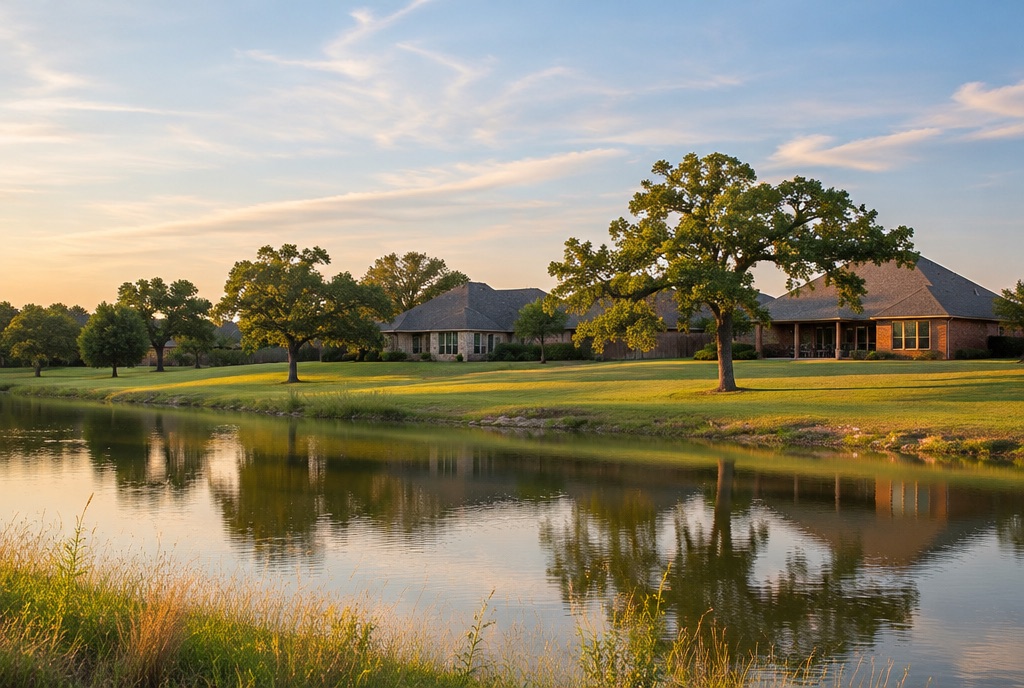
Who takes care of the pond when you buy a home that backs to water in an Edmond, Oklahoma City or Arcadia neighborhood? The short answer: in most subdivisions it is the homeowners association, paid for out of everyone's dues, but not always, and the only way to know is to read the plat, the covenants and the HOA's own records for that pond. Sometimes the HOA owns the pond and the land under it. Sometimes the lot lines run into the water and each owner holds a piece. Sometimes it is a detention pond built mostly to handle stormwater, and the city has a say in how it works. Each of those changes what you pay, what you can do on the bank, and what happens when something goes wrong.
I'm Kelli Osterman, a REALTOR® with The Osterman Team at The Agency, working with buyers and sellers in Oklahoma City, Edmond and Arcadia. I have been a licensed Realtor since 2006, and waterfront property is part of my focus. A pond view is one of the things people fall for first and ask about last. Let's flip that.
Here's what I would do.
Why does it matter who owns the pond?
Because the owner is the one who pays when the pond needs work, and pond work is rarely cheap.
A neighborhood pond is not just water. It has a dam or an embankment, an overflow or spillway, maybe an aerator or a fountain, and banks that wear away over time. Algae shows up in a hot summer. Silt builds up from years of rain washing in from the streets. Every one of those has a cost, and someone is responsible for it.
If the HOA owns it, that cost is shared across the neighborhood through dues, a reserve fund or a special assessment. If the lots run into the water, you may be responsible for your own stretch of bank. If it is a stormwater pond, there may be rules about what the HOA has to keep working and what it can change.
You don't need to be scared of any of these. You need to know which one you are buying.
How can you find out who owns it?
Start with three documents, all of which you can ask for before or during your inspection period.
1. The plat. This is the map recorded when the neighborhood was built. It usually shows whether the pond sits on a common area lot owned by the HOA or whether the private lot lines extend into the water. Your title company can pull it.
2. The covenants and restrictions. These spell out what the HOA is responsible for and what homeowners can and cannot do. Look for words like "common area," "detention," "drainage easement," "lake lot" and "maintenance."
3. The HOA's records. Ask for the budget, the reserve study if there is one, recent meeting minutes and any notice of a special assessment. The minutes are where you find out if the pond has been a topic.
If the documents don't agree with what you're being told, believe the documents and ask more questions.
What should you ask the HOA before you write an offer?
These are the questions I'd want answered in writing.
- Who owns the pond and the land under it?
- Is it a detention pond, an amenity pond, or both?
- What does the HOA pay each year to keep it up (aeration, algae treatment, mowing, fountain power)?
- Is there a reserve set aside for dredging or dam repair?
- When was the pond last dredged or the dam last inspected?
- Has there been, or is there a plan for, a special assessment tied to the pond?
- Are there rules about fishing, boats, docks, fences or plantings on the bank?
- Has water ever come over the bank or the spillway in a heavy rain?
A well-run HOA can answer most of these fast. If nobody knows, that tells you something too.
What do you actually own if your lot runs into the water?
Sometimes the lot line goes to the middle of the pond, or a set distance into it. That can mean a few things.
You may own part of the bank, so erosion on your side could be yours to fix. You may be able to add a small dock or retaining wall, but only with HOA approval and sometimes city approval. And the HOA may still keep an easement to reach the water for maintenance.
None of that is a reason to walk away. It is a reason to read the survey, look at the bank from the water side and ask what work has been done on it.
What does a pond do to a home's value?
Many buyers pay more for a home with a water view, and many sellers expect them to. Whether a specific pond adds value depends on the pond itself and on the comparable sales nearby.
What I watch for, from a design point of view, is how the house uses the view. A home with a big window on the pond, a deck or patio that faces it, and a yard that steps down to the water feels like a waterfront home. A home where the pond sits behind a privacy fence and a garage wall feels like a home that happens to be near water. Buyers notice the difference even when they can't name it.
A pond that looks tired (green water, a broken fountain, eroded banks) can cut the other way. Buyers see the work ahead, and they wonder who pays for it.
What if you're selling a home on a neighborhood pond?
Here's what I'd do before you list.
Gather the HOA documents early, so buyers' questions get answered in a day instead of a week. Know whether the pond has had any recent work or any planned assessment, because you'll likely be asked, and Oklahoma's disclosure form asks about known conditions.
Then show the view the way a buyer will live with it. Trim what blocks the water. Clean the windows that face it. Set chairs on the patio pointing at it. Photograph it in good light, and make sure the listing photos tell the truth about the pond in every season. I'd rather a buyer fall for the real view than feel misled at the showing.
What about flooding?
Ask. Every time.
A pond that holds stormwater is doing its job when it rises in a big rain. The question is how close it comes to the homes around it. Check the FEMA flood map for the address, ask your insurance agent for a quote before you're under contract, and ask the sellers and the HOA if water has ever reached a yard or a foundation.
I'm not your insurance agent or engineer, and I'll tell you when a question needs one. But the questions themselves are part of my job.
What mistakes do people make with pond homes?
- Falling for the view and never asking who maintains the pond
- Assuming the HOA covers everything without reading the covenants
- Skipping the meeting minutes, where planned assessments show up first
- Not looking at the bank and the dam during the inspection period
- Planning a dock or fence before checking what's allowed
- Waiting until after closing to get a flood insurance quote
- Listing a pond home in winter photos that make the water look gray and flat
Frequently asked questions
Who maintains a pond in an Edmond subdivision?
Usually the homeowners association, paid for out of dues, but it depends on the plat and covenants for that neighborhood. Read those documents before you buy.
Do I own the pond if my backyard touches it?
Sometimes. In some neighborhoods the pond sits on a common lot the HOA owns. In others, private lot lines run into the water. The plat and your survey will show which.
What is a detention pond?
It's a pond built to hold stormwater during heavy rain and release it slowly. Many neighborhood ponds do this job along with looking nice.
Can I fish or put in a dock on a neighborhood pond?
Only if the covenants and the HOA allow it, and a dock may also need city approval. Ask before you plan anything.
Can the HOA charge me for pond repairs?
If the HOA owns the pond and its reserves don't cover a big repair like dredging or dam work, it may vote a special assessment. Check the budget, reserves and recent minutes.
Should I get flood insurance on a pond home?
That's a question for your insurance agent. Check the FEMA flood map for the address and get a quote before you're under contract.
You can learn more on our Buyers page, see what your home might be worth on our Home Valuation page, and read our other waterfront posts on our Blog page.
What's the next step?
If you're looking at a home on a neighborhood pond in Edmond, Oklahoma City or Arcadia, or getting ready to sell one, call or text me at 405-808-1082, or call the team at 405-593-8326. We'll pull the plat and HOA documents, walk the bank together, and look at what the pond really means for the home and your budget.
Kelli Osterman is a REALTOR® with The Osterman Team at The Agency in Oklahoma City, Edmond, and Arcadia, helping homeowners and buyers make clear decisions on homes with character, acreage, and waterfront property.
Kelli Osterman
REALTOR®, The Osterman Team at The Agency
Cell 405-808-1082 | Team 405-593-8326 | kelli@kelliosterman.com | theostermanteam.com
Keep reading:
- Lake living in Oklahoma City: the hidden gem of Silver Lake
- What does it really cost to live on acreage near Edmond?
- What is hurting your home's value when interest rates are high?
- Contact Kelli and The Osterman Team
Kelli Osterman, REALTOR®, LIC. #151560 | The Osterman Team at The Agency
Information in this post is general and is not legal, tax, insurance, or financial advice. Talk to your attorney, CPA, insurance agent, lender, and a licensed professional about your situation.
The Agency fully supports the Equal Housing Opportunity laws.
AN INDEPENDENTLY OWNED AND OPERATED FRANCHISEE OF THE AGENCY REAL ESTATE FRANCHISING, LLC.